One of the most common questions pet parents ask their veterinarians is a deceptively simple one: how much exercise does my dog actually need? The answer is not one-size-fits-all. A Border Collie's needs are vastly different from a Pug's, and a puppy's energy levels bear little resemblance to those of a senior dog. Understanding your dog's specific exercise requirements is key to keeping them physically healthy and mentally balanced.
General Guidelines: 30 Minutes to 2 Hours
As a broad rule, most adult dogs need between 30 minutes and two hours of physical activity each day. Small, low-energy breeds like Shih Tzus and Cavalier King Charles Spaniels may be perfectly content with 30 to 45 minutes of moderate walking. Medium-energy breeds like Beagles and Cocker Spaniels typically need about an hour. High-energy breeds like Labradors, German Shepherds, Dalmatians, and Border Collies often require 90 minutes to two hours of vigorous activity to stay satisfied. These are guidelines, not rigid prescriptions, every individual dog has its own threshold.
Factors That Affect Exercise Needs
Several factors beyond breed determine how much exercise your dog needs. Age is one of the biggest. Puppies have bursts of intense energy but tire quickly, so multiple short play sessions throughout the day work better than one long walk. Adult dogs in their prime can handle sustained activity. Senior dogs still need daily movement to maintain joint health and muscle tone, but the intensity and duration should be reduced to avoid strain.
Health conditions also play a significant role. Dogs with arthritis, hip dysplasia, or heart conditions need modified exercise routines designed in consultation with a veterinarian. Overweight dogs benefit greatly from regular walks, but the intensity should be built up gradually to avoid injury. Even the weather matters, brachycephalic breeds like Pugs and Bulldogs are highly susceptible to heatstroke and should avoid strenuous exercise in hot, humid conditions.
Signs Your Dog Is Under-Exercised
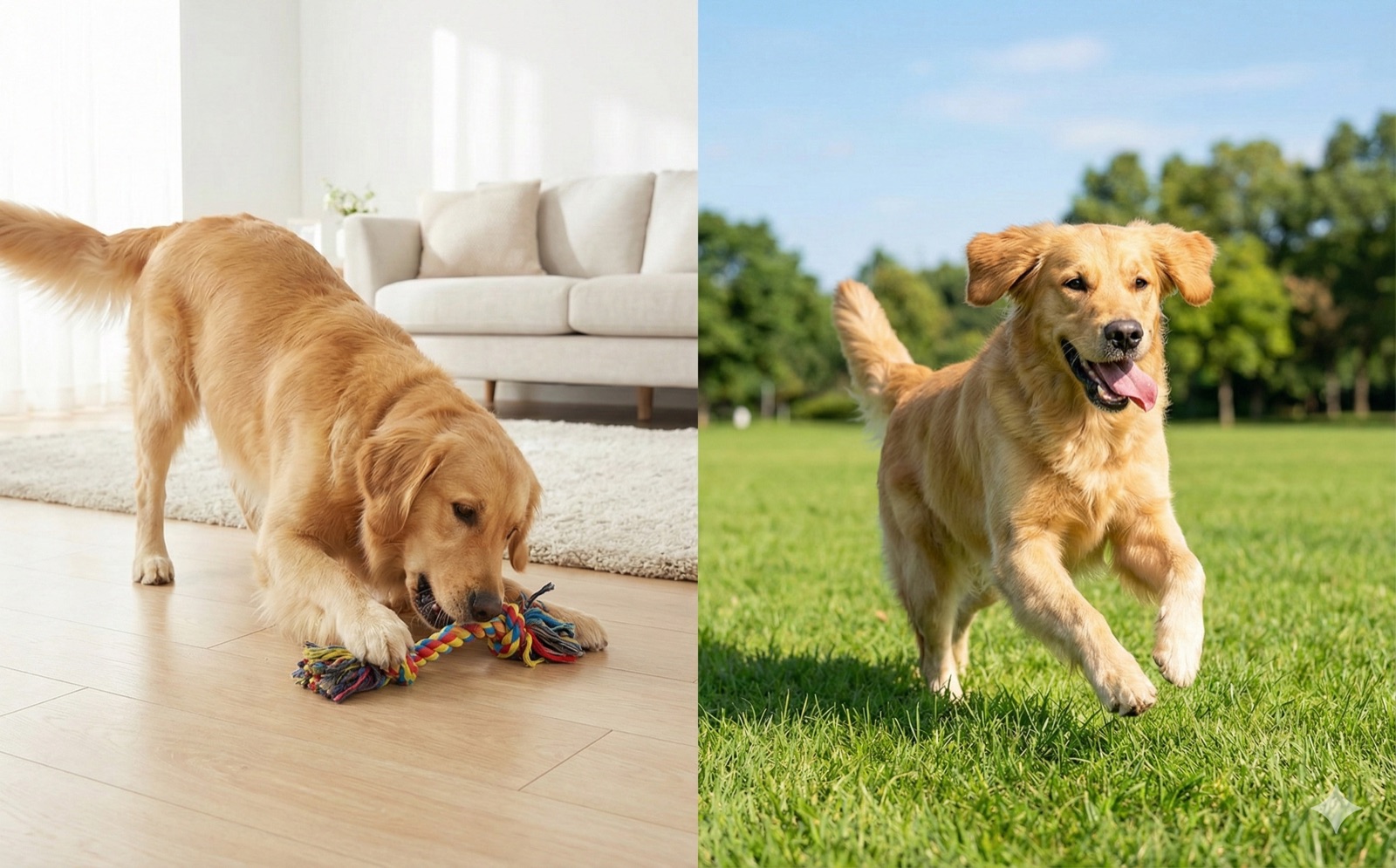
Dogs who are not getting enough physical activity will tell you in unmistakable ways. Destructive behavior, chewing furniture, digging holes, tearing up cushions, is one of the clearest signs. Excessive barking, restlessness, hyperactivity indoors, and weight gain are other common indicators. Some under-exercised dogs become withdrawn or depressed, while others develop compulsive behaviors like tail chasing or excessive licking. If you notice any of these patterns, increasing your dog's daily exercise is often the simplest and most effective remedy.
Signs Your Dog Is Over-Exercised
On the other end of the spectrum, pushing your dog too hard can be harmful. Signs of over-exercise include excessive panting that does not subside after rest, limping or stiffness, reluctance to move, worn or bleeding paw pads, and unusual fatigue. Puppies are especially vulnerable to over-exercise because their bones and joints are still developing. A good rule for puppies is five minutes of exercise per month of age, twice a day. So a four-month-old puppy would get two 20-minute sessions rather than one 40-minute walk.
Creating a Sustainable Routine
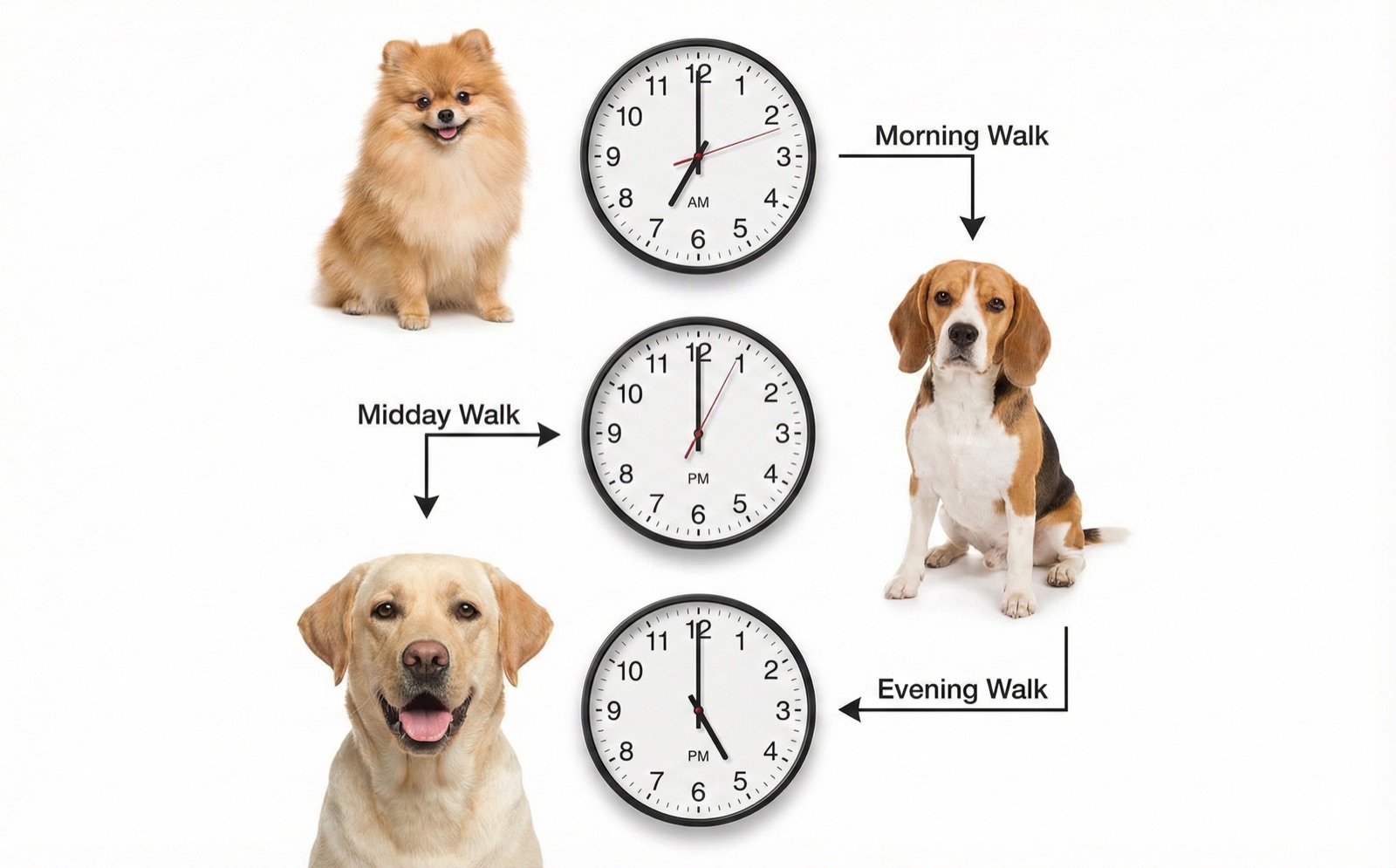
The best exercise routine is one that is consistent and tailored to your dog's unique profile. Start by establishing a daily schedule, dogs thrive on predictability. Combine different types of activity: structured walks for cardiovascular health, free play for mental stimulation, and training exercises for cognitive engagement. Monitor your dog's response and adjust as needed. If they come home from a walk and immediately crash, the duration is probably right. If they are still bouncing off the walls, they likely need more.
How Platypus Tailors Walks to Your Dog
At Platypus, we understand that no two dogs are alike. When you onboard with us, we learn about your dog's breed, age, energy level, and any health considerations. Our Guardians use this information to tailor every walk, adjusting the pace, distance, and route to match your dog's specific needs. High-energy breeds get brisk, stimulating routes with plenty of sensory variety, while senior dogs enjoy gentler paths at a comfortable pace. With live GPS tracking and detailed post-walk reports, you always know exactly how your dog's exercise needs are being met. Because the right amount of exercise is not just about quantity, it is about quality.
Ready to Give Your Dog the Best Care?
Book a trial walk with our certified Guardians today