A well-socialized dog is a confident dog. Socialization, the process of exposing your dog to a wide variety of people, animals, sounds, and environments, is fundamental to raising a pet that is calm, friendly, and adaptable. And one of the most natural, effective ways to socialize your dog is through regular walks.
Why Socialization Matters
Dogs that lack proper socialization often develop fear, anxiety, and reactive behaviors. An unsocialized dog might bark aggressively at strangers, cower at the sound of traffic, or lunge at other animals, not because they're inherently aggressive, but because the unfamiliar world overwhelms them. These behaviors can escalate over time, making everyday activities stressful for both the dog and the owner.
Proper socialization teaches dogs that the world is not a threatening place. It builds neural pathways that associate new experiences with neutral or positive outcomes, creating a foundation of emotional resilience that lasts a lifetime.
How Walks Provide Natural Socialization
Every walk is a sensory adventure for your dog. They encounter different people, children, cyclists, runners, other dog walkers. They hear new sounds, car horns, birds, construction noise, other dogs barking. They experience different surfaces, grass, gravel, wet pavement, sand. Each of these encounters is a micro-lesson in how to navigate the world.
Unlike controlled training environments, walks present unpredictable, real-world stimuli. This unpredictability is actually beneficial because it teaches dogs to remain calm and adaptable when things don't go as expected. A dog that has walked through busy streets, quiet parks, and everything in between develops a broader comfort zone than one that only knows the inside of a home.
Age-Appropriate Socialization
The critical socialization window for puppies falls between 3 and 14 weeks of age. During this period, puppies are naturally curious and open to new experiences. Walks during this stage, even short ones around the neighborhood, can have an outsized positive impact on their long-term behavior.
However, socialization doesn't end after puppyhood. Adolescent and adult dogs continue to benefit from exposure to varied environments. For rescue dogs or dogs that missed early socialization, gradual, positive walk experiences can help rebuild confidence. The key is to go at the dog's pace, never forcing interactions, always rewarding calm behavior, and slowly expanding the range of environments they encounter.
Signs of Good vs Poor Socialization
A well-socialized dog displays relaxed body language in new situations: a loose, wagging tail, soft eyes, and a willingness to approach (or calmly ignore) unfamiliar people and animals. They recover quickly from unexpected noises and don't fixate on or obsess over other dogs during walks.
Poorly socialized dogs, on the other hand, show signs of stress, tucked tails, flattened ears, excessive panting, pulling hard on the leash, or freezing in place. They may bark or growl at anything unfamiliar, or they may shut down entirely, refusing to walk. Recognizing these signs early is critical because targeted, patient walking routines can gradually improve a dog's comfort level.
Building Confidence Through Routine
Consistency is the secret ingredient. Dogs thrive on routine, and a regular walking schedule gives them repeated, positive exposure to the outside world. Over weeks and months, a dog that initially cowered at street noise learns to walk past it without flinching. A dog that lunged at every passing cyclist learns to observe calmly. This transformation doesn't happen overnight, but it does happen with patience and consistency.
Platypus's Approach to Socialization Through Walks
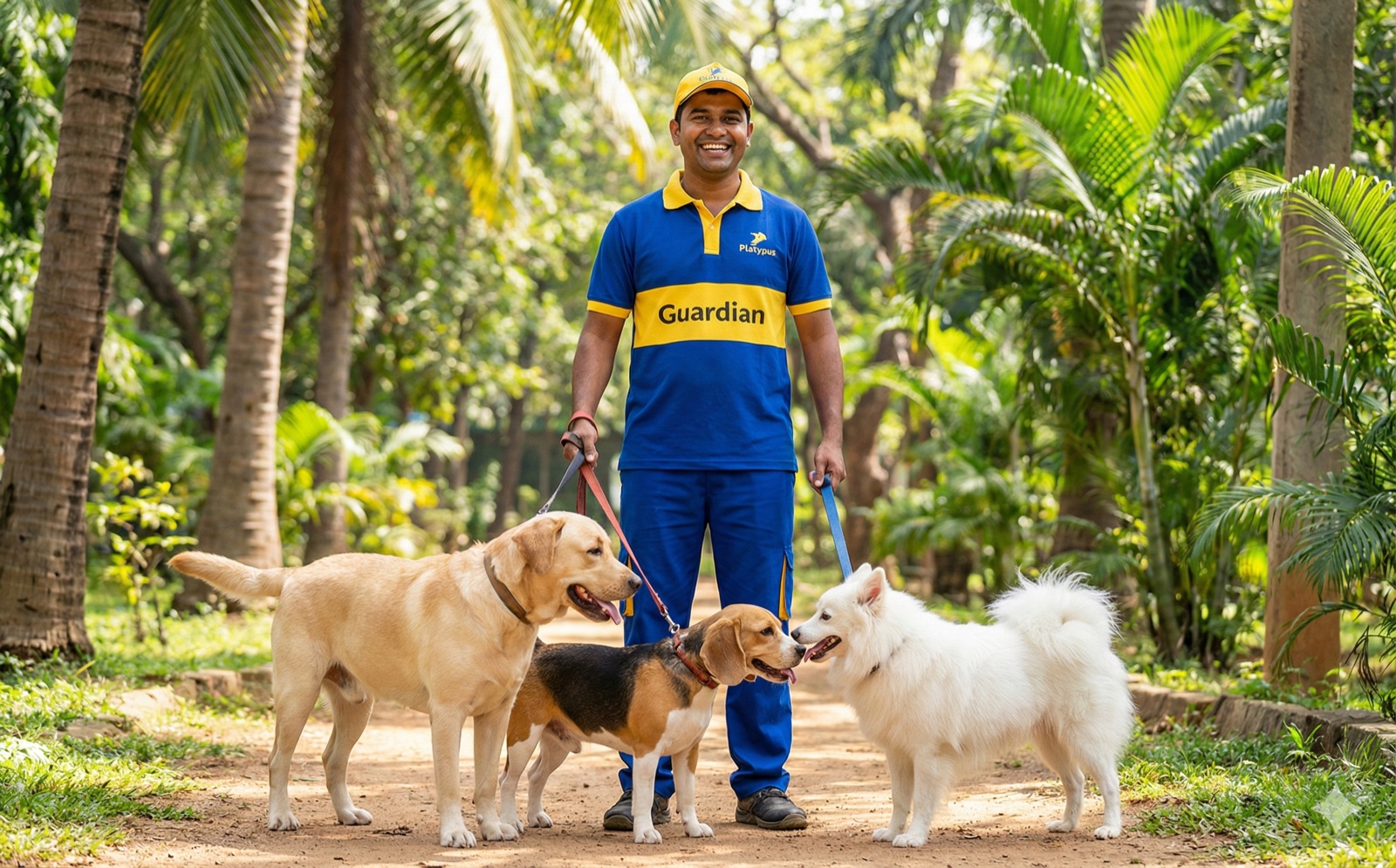
At Platypus, our Guardians are trained to understand canine body language and socialization principles. They tailor each walk to the dog's current comfort level, gently expanding boundaries without overwhelming them. For anxious or under-socialized dogs, our Guardians use positive reinforcement techniques and carefully chosen routes that introduce new stimuli at a manageable pace. Through detailed post-walk reports, pet parents can track their dog's progress over time, celebrating the small victories that add up to a confident, well-adjusted companion.
Every walk is an opportunity to help your dog become braver, calmer, and more connected to the world around them. Socialization isn't a one-time event, it's a lifelong journey, and it starts with a single step out the door.
Ready to Give Your Dog the Best Care?
Book a trial walk with our certified Guardians today